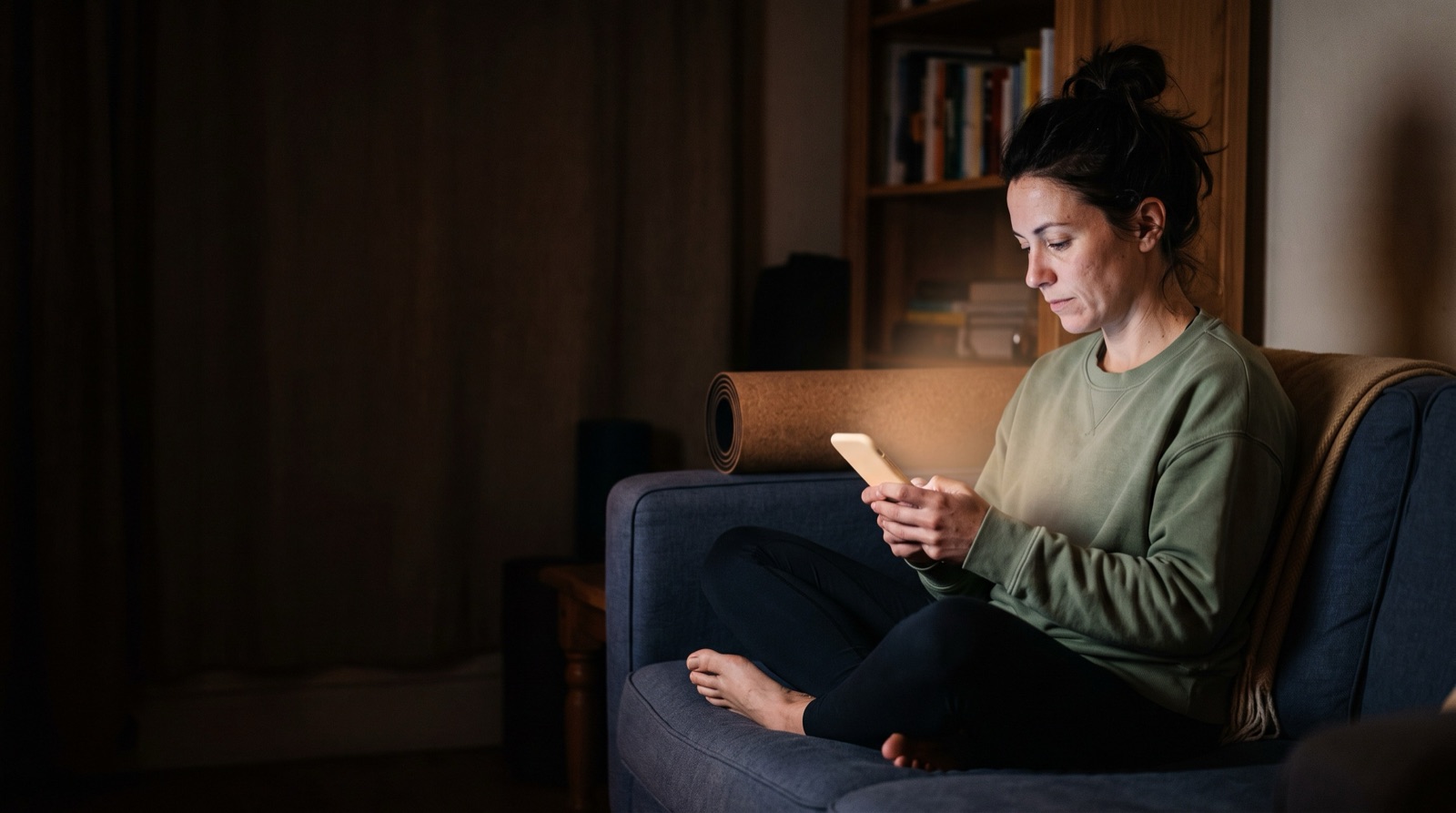
- A feed measures marketing and visibility. Not teaching. Follower counts say nothing about whether anyone held a room.
- Comparison feels like research, but it runs on attention, and it sets your ordinary day against someone else’s most polished moment.
- Comparison bites hardest in the first years, when you are still deciding what kind of teacher you want to become.
- You already teach the counter-skill. Placing attention on purpose, and bringing it back when it wanders, is the same discipline pointed at a screen.
- The better signals belong to you: whether students come back, and what they ask you for. A week of that beats any scroll.
Comparing yourself to other teachers online feels like research. It isn’t. A feed measures marketing and visibility, and it can’t show teaching at all. The way through isn’t leaving the platforms. It’s deciding, on purpose, what gets your attention, and tracking the quiet signals that belong to your own teaching. YogaPros counts a teacher’s standing in experience, not in followers.
By YogaPros — the professional body for yoga teachers since 2006, with more than 10,000 members across 100+ countries.
Why do new teachers compare themselves so much?
Because the first year or two is when you’re still working out what kind of teacher you get to be. You’re at your most open then, and your most easily shaken.
It runs right across the profession, and it lands on new teachers hardest. The shape is familiar. Someone you trained with turns up in your feed at forty thousand followers, posting a retreat in Portugal with a waiting list. Your Thursday class has nine regulars. Twenty minutes earlier you’d taught a decent class and got everyone home safe. Now you’re behind, somehow, in a race you don’t remember entering. That turn is quick. And it runs on something you can actually train.
What does a feed actually measure?
Marketing and visibility. Almost nothing about teaching.
You already know it’s a highlight reel. Knowing it doesn’t help much at the wrong time of night, because comparison runs on attention rather than on facts. Research on social comparison has mapped this for decades: we compare upward, against the most polished version of the most visible people, and our own ordinary day pays for it. The feed isn’t a fair sample, either. It’s assembled from whatever holds attention, and the teachers you see most are the ones the sorting favours, which has plenty to do with posting and little to do with teaching.
The numbers measure the wrong thing anyway. Follower counts say nothing about whether anyone held a room. They don’t show the student who could finally sleep, or the nine people who rearrange their week so they don’t miss you.
How do I stop comparing myself online?
Decide, on purpose, where your attention goes. It’s trainable, and you already teach the skill.
Yoga has treated attention as trainable for a very long time. Dharana, placing the mind somewhere on purpose and walking it back when it drifts, is part of the tradition you teach from. You lead a version of it every time you bring a room back to the breath. The same discipline works on a thumb and a screen. What you attend to grows, and starts to look like the whole truth. Feed the mind other people’s opening nights for twenty minutes an evening and it’ll build you a world where everyone is further ahead than you.
Staying on the platforms is fine. The change is choosing, deliberately, where your attention lands, and running a short, honest feed audit. The accounts that teach you something stay. The ones that reliably leave you smaller get muted. Muting is allowed. It’s the same placing of attention you teach, pointed at a screen.
Is it bad to follow other yoga teachers?
No. The accounts that genuinely teach you something are worth keeping.
The problem is narrower than “social media is bad for you.” It’s the specific few accounts that reliably leave you feeling behind, and the twenty minutes each night you hand them without meaning to. Keep learning from the teachers who give you a real cue, a sequence idea, an honest word about the work. Let the rest go quiet. That isn’t hiding from the profession. It’s the care you’d show a nervous student who kept measuring their week-three practice against someone else’s tenth year. You’d tell them the comparison wasn’t fair. It isn’t fair for you either.
What should I track instead?
Signals that belong to your own teaching, not to anyone’s marketing. The strongest ones are quiet.
- Whether students come back. How many of this week’s students return next week. In this work, returning is the real applause.
- What people ask you for. A slower class, or whether there’s another evening. A request is the clearest signal a new teacher gets.
- Whether your own practice happened. It’s the well the teaching draws from, and the first thing to go when confidence dips.
Give these a full week before your next verdict on where you are. Gather the evidence the way you’d want a nervous student to gather it: from what actually happened, over time. Then read your own signals before you open anyone else’s.
The feed will still be there in the morning. So will the nine people who came back on Thursday. One of those is the job. The other is weather on a screen.
Members go deeper. YogaPros members get the full version of this in the Learning Hub, with a one-page tracker for the three signals and a ten-minute feed audit you can download. It’s part of the Wellbeing & Mindset collection: practical support for the real work of teaching, not the marketing of it.